
Milford Parole Versus Probation
Parole and probation can both place rules on a person living in the community, but they begin in different ways. The Connecticut Board of Pardons and Paroles, often called BOPP, decides parole matters. CT DOC Parole and Community Services carries out much of the field supervision. Parole is a supervised release from a state sentence before correctional authority has fully ended. Special parole is a separate court-imposed period that follows incarceration. Probation comes from the court and is supervised through the Judicial Branch. It can replace confinement or follow a jail term. A Milford police release on bond is neither parole nor probation unless a separate sentence or order already creates that status.
| Record point | Parole | Probation |
|---|---|---|
| Who imposes it | BOPP grants parole; a court may impose special parole | The sentencing court |
| Main public trail | CT DOC status, BOPP hearing records, CT SAVIN | Judicial Branch case record and Adult Probation contacts |
| Connection to custody | Follows a state correctional sentence | May begin with or without a term of confinement |
| End point | Discharge, sentence expiration, or approved early termination | Court-ordered completion, discharge, or later court action |
A discharge means correctional or court supervision has ended for that term. An absconder is a person alleged to have stopped reporting or left supervision without authority. Neither word should be inferred from a missing online result. The controlling office or court record provides the sound confirmation.
- Parole
- Conditional community release while a state sentence remains under correctional control.
- Probation
- A court-ordered community sentence supervised through the Judicial Branch.
- Special parole
- A court-imposed supervision term that begins after incarceration.
- Discharge
- The formal end of the relevant sentence or supervision term.
Verify Milford Post-Release Supervision
Start with the event that led to release. A person released only from Milford Police Department custody may have bond terms and a pending case, but that does not establish parole. Someone released from a CT DOC facility may have parole, special parole, transitional supervision, or an end-of-sentence discharge. CT DOC's public inmate information can show status and a special parole date when applicable. A probation term is best traced through the official Judicial Branch criminal case lookup and the sentencing docket. No single Milford list combines both systems.
- Check the CT DOC inmate information search if the person entered state custody. Use the inmate number or a last-name prefix, then compare identifying fields.
- Read status, location, sentence dates, estimated or maximum release dates, special parole date, and detainer information where shown.
- Search the Judicial Branch criminal and motor vehicle case lookup for the pending case, conviction, sentence, warrant, or later court action.
- Review BOPP resources and hearing information when parole, revocation, rescission, or early termination is the issue.
- Use CT SAVIN through VINELink for registered custody, court, parole-hearing, community-release, and end-of-sentence alerts.
- Contact the supervising or records office when the public entries conflict or the question is time-sensitive.
CT DOC says its public data is updated daily, and the OBIS public feed runs nightly. A status can change before the screen catches up. A current facility listing points to custody, while parole or special parole may place the person in the community. For a police-only release, the durable trail is the Milford arrest file and court docket, not the state inmate search. The broader Milford released-inmate search and records path explains those custody branches.
Note: Eligibility, a scheduled hearing, and an approved release are three different stages and should never be treated as the same result.
Milford Parole Hearing Records
BOPP publishes hearing resources rather than a separate static decision database. Its public guidance says hearings may occur Monday through Friday. The hearings page lists a usual start time of 9 a.m. unless another time is posted, while the event calendar carries future dates. Hearings use a video link between the main office and the institution. A three-member Board panel and a parole officer take part, with victim-services staff and victims or family included when appropriate. The panel asks questions, then deliberates in open session and announces a decision.
The BOPP Hearing and Event Calendar is the source for scheduled events. It does not prove that parole was granted. Current status should be matched to CT DOC and CT SAVIN. A copy of a Board hearing can be requested by freedom-of-information email at BOPPFOI@ct.gov when the public record itself is needed. BOPP warns that the public must not record, screen-capture, or photograph livestreamed proceedings under C.G.S. § 1-226.
The official BOPP calendar shows how Connecticut publishes hearing dates for Milford parole questions.
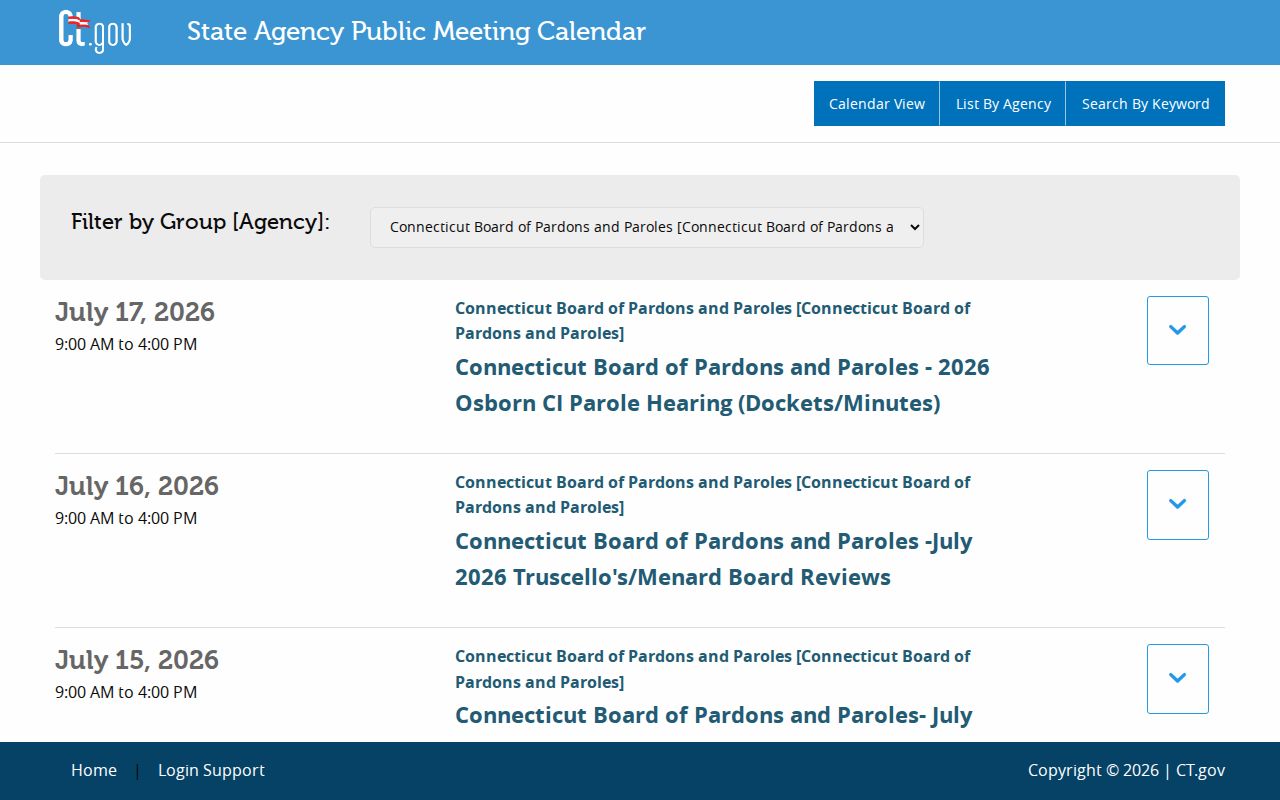
That calendar is a scheduling source, while the DOC status and Board record establish what happened after the hearing.
Milford Parole Violations and Warrants
Supervision conditions depend on the order and individual plan, so a public page cannot supply a person's full rules. At a high level, conditions can govern reporting, approved residence, travel, treatment, program attendance, and compliance with the law. A claimed violation can lead to investigation, a warrant, return to custody, or a revocation hearing. Revocation is the formal process for deciding whether parole should be taken back. It is not established by rumor, a missed call, or a stale search result.
No Milford-specific absconder list was found. An alleged parole absconder may surface through DOC fugitive material, a BOPP revocation matter, CT SAVIN alerts, or law-enforcement information. A probation warrant may instead appear through the Judicial Branch arrest-warrant route or the case docket. CT SAVIN notifications can include escape or absconding events, but the service is an alert channel rather than a permanent record archive. Use the warrant source and supervising agency that match the supervision type.
Important: A missing DOC facility location does not by itself mean discharge, a violation, or an active warrant.
How Milford Supervision Ends
Parole may end when the sentence expires, when BOPP or another authorized process grants early termination, or when the person is formally discharged. Probation ends under the court's sentence and later orders. A person can leave physical custody yet remain supervised, so the release date and supervision-end date are not interchangeable. Connecticut law also recognizes community supervision until sentence expiration for certain offenses under C.G.S. § 18-100d. The exact controlling term must come from the sentence, DOC record, Board record, or court docket.
CT SAVIN has a useful limit after discharge. CT DOC Victim Services says notifications for the identified person do not continue after the sentence is completed unless post-incarceration supervision such as probation applies and is violated, or the person re-enters the justice system and the registrant signs up again. That makes SAVIN useful for live changes, not for proving every old supervision term. For older Milford records, a court entry may also have aged off, been erased, or been sealed. Request the official record when a past end date matters.
Note: A past release date confirms a custody event, while a discharge entry confirms the end of the relevant sentence or supervision authority.
Milford Reentry After Release
Milford does not have a county-jail reentry system because Connecticut's pretrial jails and sentenced prisons are run by CT DOC. The DOC Offender Re-Entry Services model begins planning at admission and makes the work more intensive before release. That statewide path is the right frame for a Milford person leaving DOC custody. It can connect correctional planning with community placement and post-release supervision.
The Connecticut Reentry Collaborative resource list adds a New Haven-area layer. It identifies pre-release and work-release resources, including The Connection, Inc. at 48 Howe Street in New Haven and phone 203-376-0252. The listing is a practical resource, not proof of supervision or enrollment. Parole status must still be verified through DOC, BOPP, or the regional office. Probation status remains a court matter.
Milford ID Retrieval After Release
Identification left in CT DOC custody follows a state process. Connecticut 211's identification retrieval information says a person who has been out of DOC custody for more than 30 days should contact the DOC Central Office Reentry Services Unit at 860-692-7869. It also says personal identification stays secured at Central Office for two years. This path applies to documents held through DOC, not to each release from Milford police custody.
The distinction can prevent wasted calls. A police-only release may involve property held by the local arresting agency, while state-prison documents follow the DOC route. If supervision is active, the parole or probation officer may help identify the right office, but that does not change who controls the property record. Ask about the specific item, release facility, and date, then follow the agency's retrieval rules.
Milford Parole Office Details
For Milford parole and special-parole matters, the New Haven regional context is more local than BOPP's hearing office in Waterbury. CT DOC's Parole and Community Services office list identifies regional supervision offices. The New Haven District source information lists 620 Grand Avenue, New Haven, CT, and 203-937-2400. Contact the office to route a supervision question, not to search a Milford police arrest record.
New Haven District
CT DOC Parole and Community Services
620 Grand Avenue
New Haven, CT
203-937-2400
Board of Pardons and Paroles
55 West Main Street, Suite 520
Waterbury, CT 06702
203-805-6605
Hearing and Board records
The official community supervision office list provides the statewide and regional structure used for Milford parole supervision.
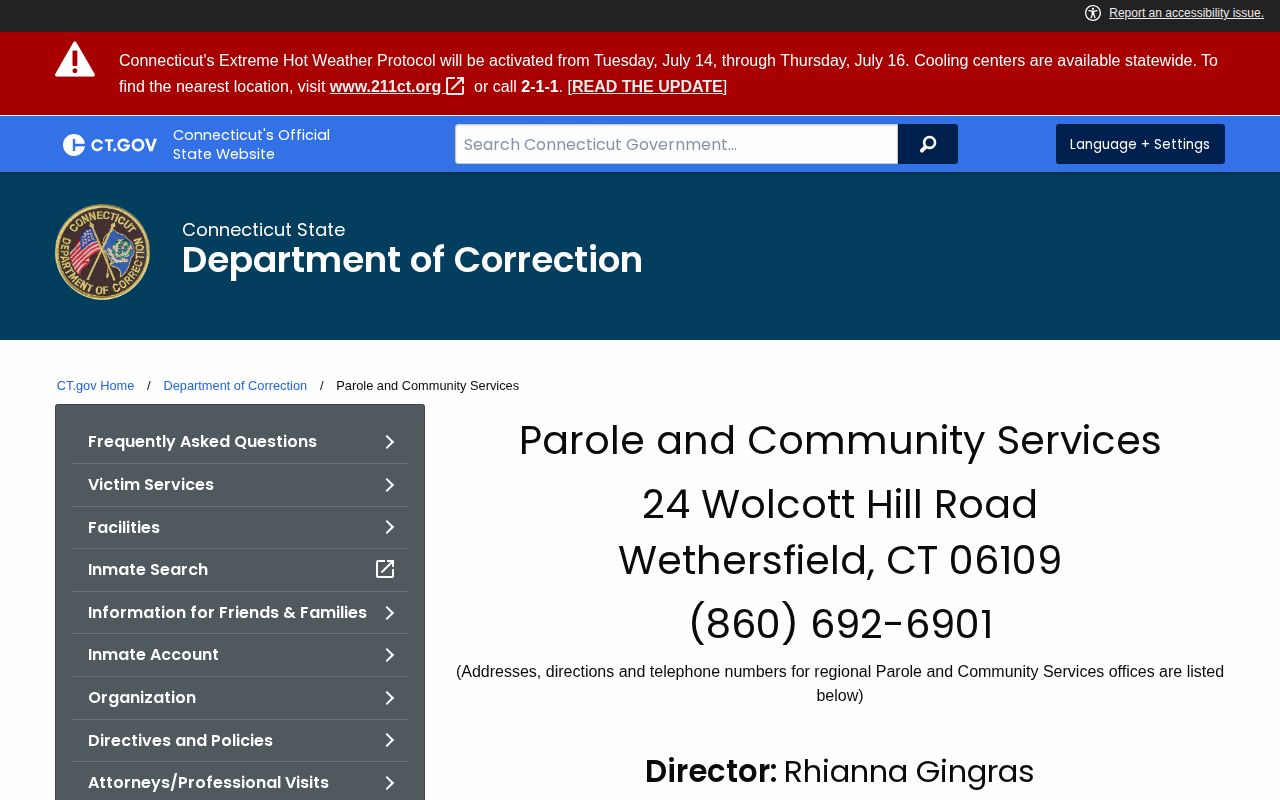
The New Haven District is the practical regional contact, while BOPP remains the source for Board hearing and decision matters.